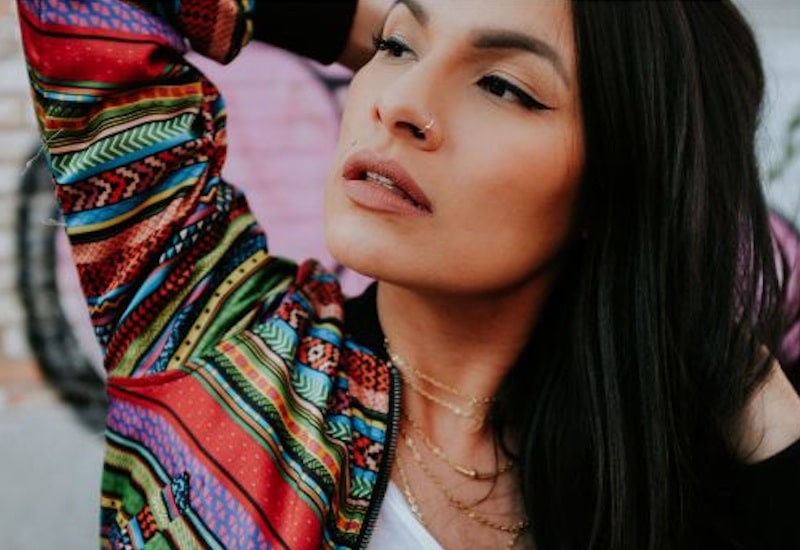
Tea and Bannock, a photo blog by and for indigenous women, has picked up photographers from across Canada and the United States. Its founder also sees it as an important way to communicate with the larger society.
In May, Xyza Cruz Bacani leaves Hong Kong to start a prestigious photography fellowship in the Big Apple. Every domestic helper has a story to tell. Some tell of abuse, some of homesickness. Bacani’s is a dream come true.
In two recent gallery shows in New York female artists of Indian heritage emphasized the universal appeal and power of female Hindu deities. In India, taking such artistic license can stir controversy over crossing a religious line.
It’s time to do something about the lack of paid parental leave in the United States. Does anyone realize that this deprivation leaves us in the company of such under-developed countries as Papua New Guinea and Swaziland?
Brook Bello had all the trappings of a successful career. But the actress-poet-filmmaker also had a horrible childhood secret. Now she’s teaming up with the International Black Women’s Public Policy Institute to talk about sex traffic.
One woman made a movie about trafficking survivors in Nepal who now track down perpetrators. Another turns spent bullets into jewelry. All were hailed by a group called Freedom to Create, focused on the power of art to heal and change.
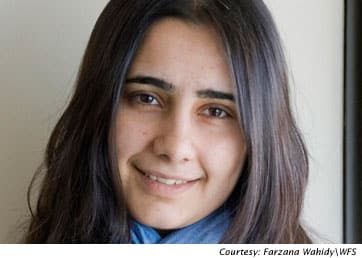
Farzana Wahidy is only 26 but she’s had a storied life. As the first female Afghan photojournalist to work for international wire services, she taps into her own difficult years sneaking a secret education under the Taliban.
In a New York photography exhibit female Muslim students show off a range of work and attitudes toward self representation. While some pose in personal shots, three refuse to be photographed for religious reasons.
Prague is hosting a photography exhibit that documents the sexually degrading ads that pervade the city. Women’s rights activists say it’s a chance to talk about a subject that receives little critical attention in the former Soviet bloc.
The women of Calama, Chile, have been digging in the sand for loved ones lost during the Pinochet regime. A new photo-exhibit documents their efforts at a pivotal moment in their long struggle for justice.
This site uses cookies to provide you with a great user experience. By continuing to use this website, you consent to the use of cookies in accordance with our privacy policy.