Juhie Bhatia is the managing editor of Women’s eNews. She has covered health, science and women’s issues for over 10 years as a reporter and editor. Previously the public health editor of Global Voices Online, she’s also helped launch EverydayHealth.com, one of the leading health websites in the U.S., and worked for the Center for Science in the Public Interest’s Nutrition Action Healthletter. She’s written for Reuters Health, Nature Medicine, Planned Parenthood’s teenwire.com, Bust magazine, HealthDay, Bulletin for the World Health Organization and MSNBC, among others. She’s a graduate of Columbia University’s Graduate School of Journalism and also has a bachelor’s degree from the University of Guelph, Canada, in nutritional sciences.
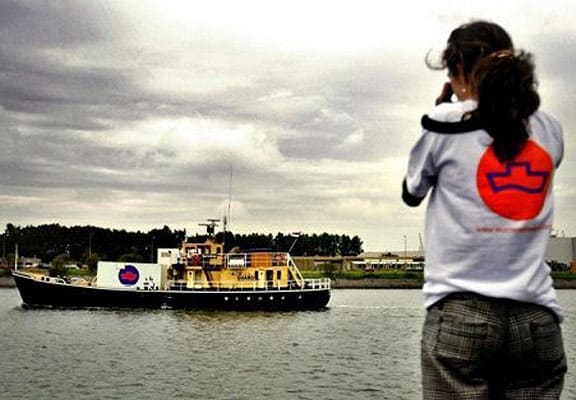
Women on Waves hopes to offer medical abortions and publicize misoprostol, a drug that can induce an abortion. It’s in Moroccan pharmacies and elsewhere in the region under the brand name Artotec. This marks the ship’s first trip to a Muslim country.
Morocco has blazed a reputation as a can-do country when it comes to improving its maternal health statistics. But a birth attendant in the remote Atlas Mountains shows the steeper climb that lies ahead for the country as it tries to reach rural women who live far from any health clinic.
Morocco is on target to be one of the few countries to meet the U.N.’s goal of lowering maternal mortality by 2015, in part thanks to a strong Peace Corps program and smaller families. A woman waiting at a clinic dramatizes how things are changing.
The youth-led Feb. 20 Movement in Morocco has simmered down to a core group that includes many female activists. They’re keeping an eye on constitutional reforms enacted last year that some say didn’t go far enough. “We want real, radical change,” says one.
Diabetes and obesity are big problems for Hispanic women in New York, particularly those in low-income areas such as the South Bronx. Nutritionists say lessons in healthier eating and cooking begin with a cultural understanding of food.
Moroccan activists met in Fez last week to learn how to use an online database of women’s rights court decisions. They hope it will help propel reforms that were too late for Amina Filali, the teen who killed herself after being forced to marry her rapist.
Many activists in Morocco are outraged and protesting the laws that led to the suicide of a 16-year-old near Tangiers, who was forced to marry her rapist. Juhie Bhatia, Women’s eNews managing editor, was in Morocco for reaction.
Sarah Abdurrahman, a 27-year-old U.S. radio producer, started a Twitter feed based on local contacts in Libya. In the early days of the uprising, when foreign media was mainly absent, it provided a crucial stream of communication.
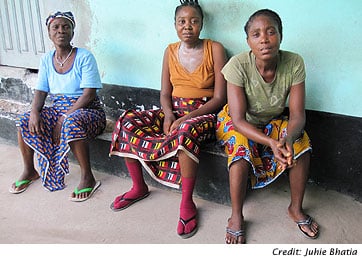
Liberia’s high rate of maternal mortality is partly due to the long distances women must travel to reach clinics. A project closes that gap by building “maternity waiting homes” near these facilities. The first one opens its doors this week.
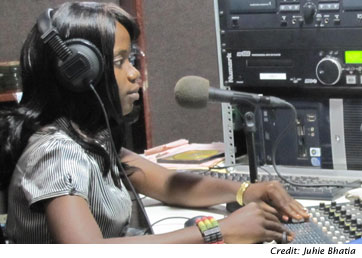
A new radio station in Liberia airs national broadcasts about women’s interests and needs. It also grooms female journalists, a tall order in a country where 14 years of civil war have left women’s literacy levels lagging far behind.
This site uses cookies to provide you with a great user experience. By continuing to use this website, you consent to the use of cookies in accordance with our privacy policy.