Some advocates at last week’s International AIDS Conference greeted news of the results of an HIV gel coolly, saying more was needed than a “medicalized” response to an epidemic that travels a social pathway of infringed women’s rights.
A Somali woman in Kenya faces an arranged wedding knowing she could infect her husband with HIV-AIDS. She contracted the disease through unsafe anal sex to preserve her virginity.
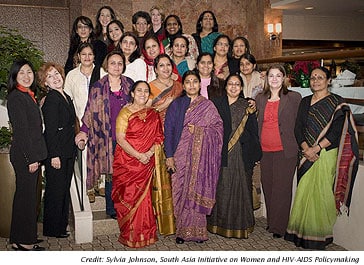
South Asian women from three spheres–journalism, politics and advocacy– recently planned a coordinated attack on HIV-AIDS among women. Their focus is on transportation, property rights and education.
On Dec. 1, the 20th annual World AIDS Day, health advocates are raising the alarm about the quadrupling of HIV-AIDS among American women and the failure of the U.S. heath care system to address this growing pandemic.
Health officials at a global AIDS conference in Mexico City this week highlighted the growing feminization of the pandemic and its link to gender violence. The U.N. may form a women’s agency that advocates say could mount a more effective response.
Rev. Wright’s incendiary comment about the HIV virus gives Carol Roye a chance to raise a problem that needs its own blast of media attention: women’s unprotected anal intercourse with male partners.
Nicole Itano went to Africa as a young reporter and found she couldn’t escape covering AIDS as it gripped the continent. Focusing on the stories of three women, she covers the complexities of the disease and the human side of those who live with it.
Zambia is receiving hefty U.S. funding for its anti-AIDS effort but is showing much less for it than nearby Rwanda. A comparison of the countries suggests two key ingredients of success: strong condom promotion and support of women’s rights.
This site uses cookies to provide you with a great user experience. By continuing to use this website, you consent to the use of cookies in accordance with our privacy policy.