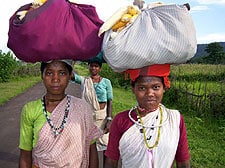
Women are most of the developing world’s farmers. But they are being left out of the rush to grow lucrative petrol alternatives because of their limited access to land, capital and technology, according to a major study released this week.
India’s land rights act enacted Jan. 1 was considered a major milestone for tribal and forest – dwelling communities. But women’s activists say it fails to protect the property rights of women, some of whom are forming collectives to hold on to land.
In a warm-up meeting ahead of a major global-warming gathering in Bali in December, advocates pressed negotiators to include more women in the process and pay more attention to women’s special expertise and exposure to climate change.
Women are not only expected to bear the brunt of global warming they are also often in the best position to redress environmental degradation. For these reasons women are pushing for more seats at tables where climate change is discussed.
At the World Summit on Sustainable Development, an agreement was reached to promote clean water and sanitation facilities throughout developing nations, a pact that could have a profound impact on women’s lives.
This site uses cookies to provide you with a great user experience. By continuing to use this website, you consent to the use of cookies in accordance with our privacy policy.