States should guarantee paid time off for sickness. Too many workers–mostly women–are prepping food and providing healthcare when they should be home with the flu. Second of four in a series by Women Employed’s Melissa Josephs.
The annual income of the typical older woman was $14,000 in 2010, compared with the older man’s $24,300, finds a March 29 report from Wider Opportunities for Women. More elderly women live alone, which contributes to their financial insecurity.
Italy held a national day of mourning for people killed by the Mafia on March 21. Wives, daughters and mothers of the survivors also have paid a price. Two of them, described here, have led the struggle for justice.
Women produce half of the world’s food, earn 10 percent of the world’s income and own less than 1 percent of the world’s property. The U.S. Government’s Millennium Challenge Corporation says its anti-poverty efforts aim to change these statistics.
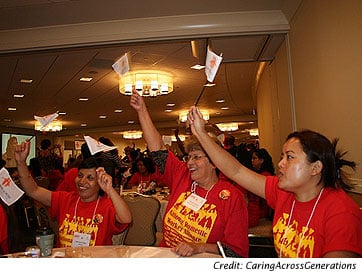
Elder-care jobs are booming as the U.S. population ages. A rule to extend federal wage protections to this predominantly female work force is in public comment stage; advocates push five reforms; one for each finger of a caring hand.
Minimum-wage jobs are mainly held by women struggling to support families on way too little. Let’s guarantee these hard-working breadwinners a living wage. The first in a series of articles by Women Employed on the challenges facing low-wage workers.
After decades of enduring frozen wages, the nation’s 3.3 million tipped workers — most of whom are women — may receive a minimum-pay hike. This could alleviate what economist Sylvia A. Allegretto calls an under-appreciated factor in women’s poverty.
One and a half million New Yorkers face a terrible dilemma when they or their child become ill. That’s because they have no paid sick days. Sherry Leiwant says we need a law to lift a burden that’s particularly hard on low-income single moms.
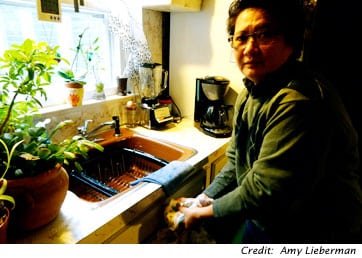
What’s it like to work in one of the most female-dominated occupations? Amy Lieberman kicks off our series with a day in the life of a home health care worker outside New York. Vicky Talag loves her work but doesn’t feel right asking about a raise.
Female retail workers in the New York area experience hardships common in a sector plagued by low pay, little health insurance, scheduling instability and an abuse of part-time job status, a Retail Action Project report finds today.
This site uses cookies to provide you with a great user experience. By continuing to use this website, you consent to the use of cookies in accordance with our privacy policy.