
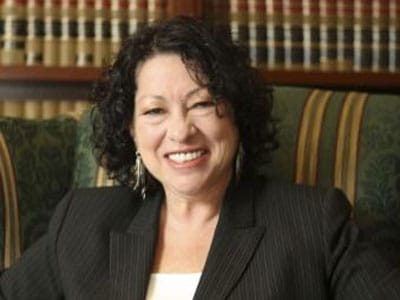
With Sonia Sotomayor appearing likely to join Ruth Bader Ginsburg and become the second female justice on the High Court, Sharon Johnson looks back over their decisions for clues to their similarities–and differences–on gender issues.
Ruth Bader Ginsburg faced little scrutiny during her 1993 confirmation hearings, winning unanimous support for her view that gender discrimination hurts men as well as women.
Is there much judicial daylight between Supreme Court nominee Judge Sotomayor and outgoing Judge Souter on gender issues? After the AT and T ruling on maternity leave, women’s advocates expect the answer will be a resounding yes.
Unions that put family-friendly benefits at the heart of contract negotiations are boosting their case with productivity arguments. One group of janitors says they most want assistance managing their children’s education. The second of two stories.
As union members face growing financial stress, some expect contract negotiators to intensify the push for family-friendly benefits. A Web site launched earlier this month is there to help. The first of two stories.
Heavy job losses in March are raising the specter of more missed mortgage payments. Men suffered the worst unemployment, but women’s personal finances tend to be more precarious, which could put them in the middle of the next foreclosure wave.
Women are almost twice as likely as men to hold subprime mortgages. That means the ability of many to hang on to their homes could be tied up with Senate action–expected this month–on a bill to reduce mortgage payments.
Women’s labor advocates expect the new nominated labor secretary, Hilda Solis, to champion occupational safety, minimum-wage enforcement and women’s efforts to organize themselves for collective bargaining.
Programs to curb foreclosures could have a disproportionate benefit for female homeowners. A Chicago Reporter gender analysis of mortgage data conducted for Women’s eNews finds female borrowers almost twice as likely to hold subprime loans.
Michigan, Ohio and Pennsylvania–where union members represent 25 to 35 percent of all voters–are tough battlegrounds. Female union members are doing what they can to persuade Rust Belt rank-and-file to pull the lever for Democrats.
This site uses cookies to provide you with a great user experience. By continuing to use this website, you consent to the use of cookies in accordance with our privacy policy.