The fall human rights season–capped by the Nobel Peace Prize–left women receiving a fair share of the thanks-giving. Outside the ballrooms, the celebrity can give recipients a new measure of safety.
Women’s studies professors are restless in the Ivory Tower. Exhibit A: At the recent annual meeting of the National Women’s Studies Association, the workshop that drew the big crowd was on how to land a big book deal.
In a small theater group in Manhattan, young women find an open, free space to give voice to their ideas and expressions even as they are marginalized by the outside world. The result is concrete skills-building and compelling art.
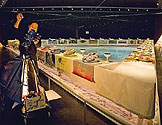
In a landmark year for feminist art, the opening of the Elizabeth A. Sackler Center for Feminist Art in the Brooklyn Museum of Art offers a final refuge from tokenism and exclusion. Does institutionalism also mean the end of a dissident era?
For some young women the DIY movement offers a way to synthesize a resurgent interest in domestic arts into a new brand of feminism and participate in a broad, unstructured resistance to the mass-marketing of products and policies.
A large family of handmade cloth dolls provide children with honest answers about anatomy. Adult dolls have genitalia and pubic hair and mother dolls have breasts that can be snapped onto a baby doll’s mouth to teach the importance of breastfeeding.
Young women who might be described as third-wave feminists aren’t necessarily satisfied with the term. A new anthology, a traveling exhibit and the International Museum of Women all probe the question of generational identity.
The U.S. Senate recently passed legislation to reduce aging stigma and improve mental health treatment for older Americans. Meanwhile, some women’s groups are crafting their own upbeat policies toward the 50 and more crowd.
Pop singer Pink’s “Stupid Girls” hit song and MTV video expresses outrage at young women’s self sacrifice to beauty and fashion. Some have applauded her for being outspoken, while others say the song’s name is insulting.
About 35 million American girls and women have eating disorders but treatments are mostly limited to private clinics and pricey outpatient therapies. Many patients say their insurance cuts off payments for adequate treatment.
This site uses cookies to provide you with a great user experience. By continuing to use this website, you consent to the use of cookies in accordance with our privacy policy.