Amy Lieberman is a journalist based in New York City, where she reports on human rights, social issues and the environment for a range of news outlets.
Sexual violence in Syria and women’s global access to justice are expected to take highest priority as women’s advocates gather for the U.N. General Assembly. Also on the agenda: the unmet development goals for maternal health.
Many women who have been driven from their homes by Colombia’s sprawling, multi-layered conflict don’t intend to use a new law to try to regain their land. Going home still seems too dangerous.
A new wave of programs is gently stirring young Colombians in violent cities to talk about their lives. Organizers say their goal is to help women think about protecting themselves and their children from family violence.
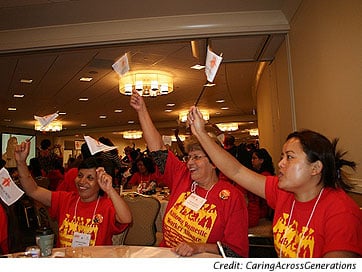
Elder-care jobs are booming as the U.S. population ages. A rule to extend federal wage protections to this predominantly female work force is in public comment stage; advocates push five reforms; one for each finger of a caring hand.
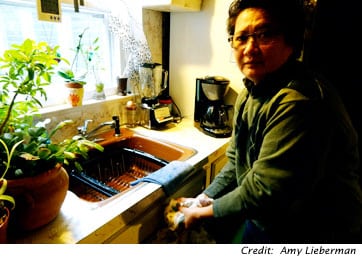
What’s it like to work in one of the most female-dominated occupations? Amy Lieberman kicks off our series with a day in the life of a home health care worker outside New York. Vicky Talag loves her work but doesn’t feel right asking about a raise.
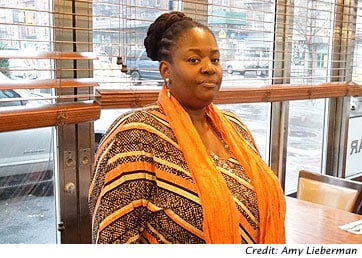
New York City layoffs in October knocked out jobs for 642 support-staff workers, mostly women of color. Their union is suing the city for outsourcing to private contractors, a national trend tied to black women’s jobless rates.
The United States deported a record-breaking number of people in the past year. Many of these deportees are parents of U.S.-citizen children, leaving some mothers suddenly struggling to support their families.
A “Whistleblower” screening at U.N. headquarters recently turned heated. When the secretary-general cast the problem of peacekeeper abuse as a “dark period” in the past, the movie’s director took issue, saying more movies are to be made.
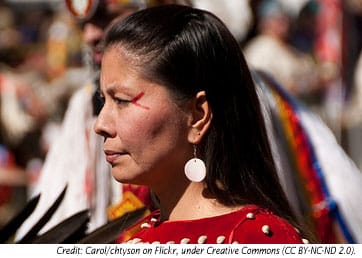
A federal law passed in July was supposed to benefit American Indian and Alaskan Native women who are disproportionately vulnerable to abuse. But tight funding and immunity for non-Indian men are two major limitations.
Non-communicable disease was a major focus at U.N. meetings this week. So was women’s health. But critics said the two topics ran on parallel tracks, missing the chance to focus on women’s vulnerability to illnesses such as diabetes and cancer.
This site uses cookies to provide you with a great user experience. By continuing to use this website, you consent to the use of cookies in accordance with our privacy policy.