As an aesthetic physician, I have noticed a profound shift in the conversations I have with women in their forties and fifties. Very few begin by asking, “How do I look younger?” Instead, they say something far more revealing: “I don’t recognize myself anymore.” At first glance, it appears they are talking about wrinkles, jowls, or changes in skin quality. But if you listen carefully, that is rarely what they mean. They are talking about identity.
For the first time in human history, women are navigating one of the most significant biological transitions of life while simultaneously seeing themselves reflected hundreds of times each day, on Zoom, FaceTime, smartphone cameras, security cameras, social media, selfies, and filtered feeds.
The aesthetic industry experiences a huge surge in consumer demands for cosmetic procedures, which was mainly driven by prolonged self-view during videoconferencing. Research later showed that prolonged self-observation was associated with greater appearance dissatisfaction, increased self-focused attention, and, as a result, greater interest in cosmetic procedures, a phenomenon now commonly referred to as the “Zoom effect” or “Zoom dysmorphia.”
But I believe the mirror tells only half the story. The other half is happening inside the brain.
Perimenopause Is a Neurochemical Transition
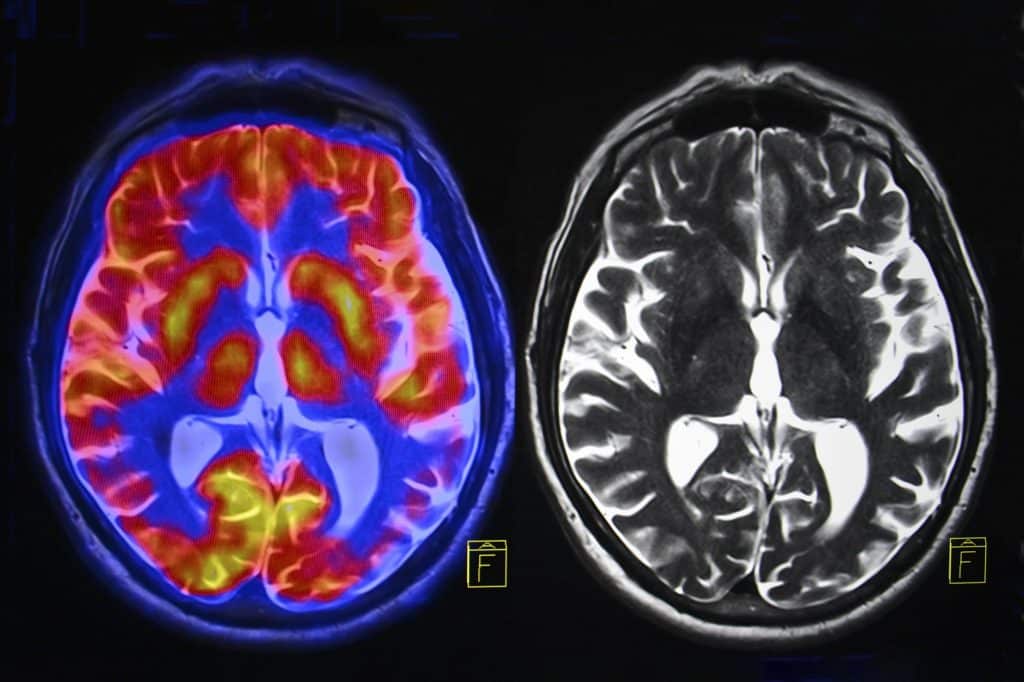
Most women understand that estrogen and progesterone eventually decline during perimenopause. What receives far less attention is how these hormonal shifts reshape the neurochemistry that regulates our emotions, confidence, resilience, and perception of ourselves.
I am going to be a little nerdy right now and tell you about some complex medical terms, bear with me, because I believe it is important for every woman going through perimenopause to become familiar with them. Progesterone is converted within the brain into allopregnanolone, a neuroactive steroid that enhances signaling through the GABA-A receptor, the brain’s primary inhibitory system. One of its roles is to soften emotional intensity and reduce hypervigilance.
During perimenopause, progesterone often declines first and becomes increasingly erratic. As allopregnanolone levels fluctuate, GABAergic signaling becomes less stable, leaving many women feeling more anxious, emotionally reactive, or unable to find the calm that once came naturally.
At the same time, fluctuating estradiol influences multiple neurotransmitter systems, including serotonin and dopamine. These changes can affect mood regulation, reward processing, cognitive confidence, motivation, and emotional flexibility. Women often describe feeling like completely different people from one week to the next, confident and decisive one day, uncertain and deeply self-critical the next.
The Real Crisis Is About Meaning
Now place this changing brain in front of a million mirrors. A woman attends video meetings throughout the day while simultaneously watching herself age in real time. She scrolls through social media where filtered faces quietly redefine what “normal” looks like. Algorithms reward youth, symmetry, and flawlessness. Every camera becomes another opportunity for self-evaluation.
Eventually, biology and technology begin amplifying one another. Hormonal fluctuations increase emotional sensitivity, and constant visual feedback increases self-monitoring. The result is often an overwhelming feeling: “I’m aging faster than everyone else.” She usually isn’t, but the feeling is real enough to shape how she sees herself. Many people will call this vanity. I see it as neurobiology, psychology, and digital culture converging on the same moment.
The Question Worth Asking First
As physicians working in aesthetic medicine, we have an ethical responsibility to recognize this distinction. A woman sitting in our consultation room may not primarily need treatment for wrinkles. She may need someone to help her understand why her relationship with her own reflection suddenly feels unfamiliar.
I’ve started asking a different first question: “What has changed in your life that brought you here today?” rather than “What would you like to change?” The two rarely lead to the same answer.
Aesthetic Medicine Should Begin With Self-Trust
Our profession often finds itself trapped between two extremes. One side tells women they should simply embrace aging, while the other encourages them to correct every perceived imperfection. Neither approach honors women’s autonomy.
As dismissive as it can be to tell a woman to erase every wrinkle, it can be equally dismissive to tell her she should simply “accept aging.” Both positions make the decision for her. I believe aesthetic medicine should begin with self-respect rather than self-rejection. There is nothing inherently empowering about refusing a treatment, and, at the same time, there is nothing inherently superficial about choosing one.
A woman who chooses Botox, filler, plastic surgery, or no intervention at all can make an equally healthy decision, provided that decision comes from self-trust rather than fear, shame, social pressure, or the pursuit of someone else’s approval.
The goal is to reclaim our choices rather than surrender them to an industry, a partner, or an algorithm.
Meeting Ourselves With Curiosity
Perhaps the greatest challenge of perimenopause is learning how to meet ourselves with the same compassion we would naturally extend to our closest friend, rather than learning how to preserve youth.
Imagine standing in front of the mirror and asking a different question. Try, “How do I support you?” instead of “How do I fix this?” That single shift changes everything. Wrinkles start reading as biology rather than failure. Emotional turbulence starts reading as a brain adapting to profound hormonal transformation rather than as weakness. Perimenopause itself starts feeling like a transition into another stage of womanhood rather than a punishment.
Perhaps the real goal has always been something more courageous than aging gracefully: to age authentically, to preserve our ability to recognize ourselves, and to support our faces and bodies through every change with kindness and grace.
That, in my view, is where true beauty begins.
——–
About the Author
Dr. Natalya Borakowski is a licensed naturopathic physician and aesthetic medicine expert with more than 18 years of experience treating women, and the founder and medical director of Desert Bloom Skincare in Scottsdale, Arizona. She is the author of the forthcoming book When Beauty Is Currency.