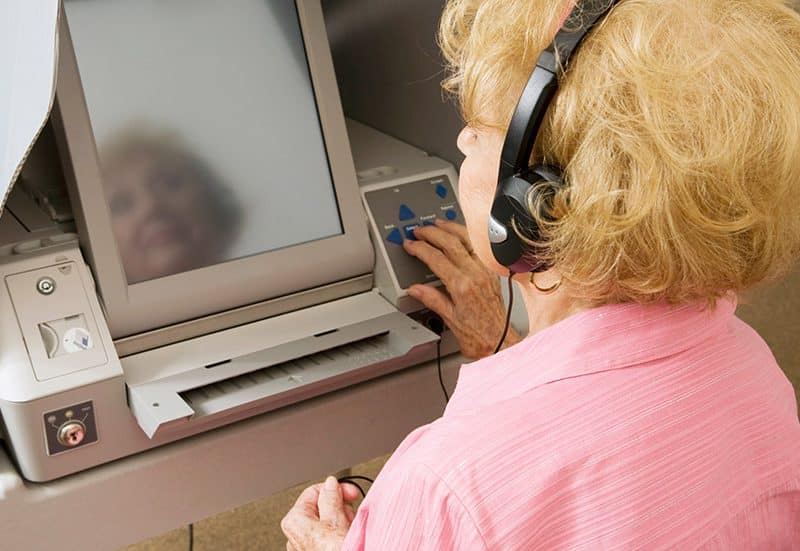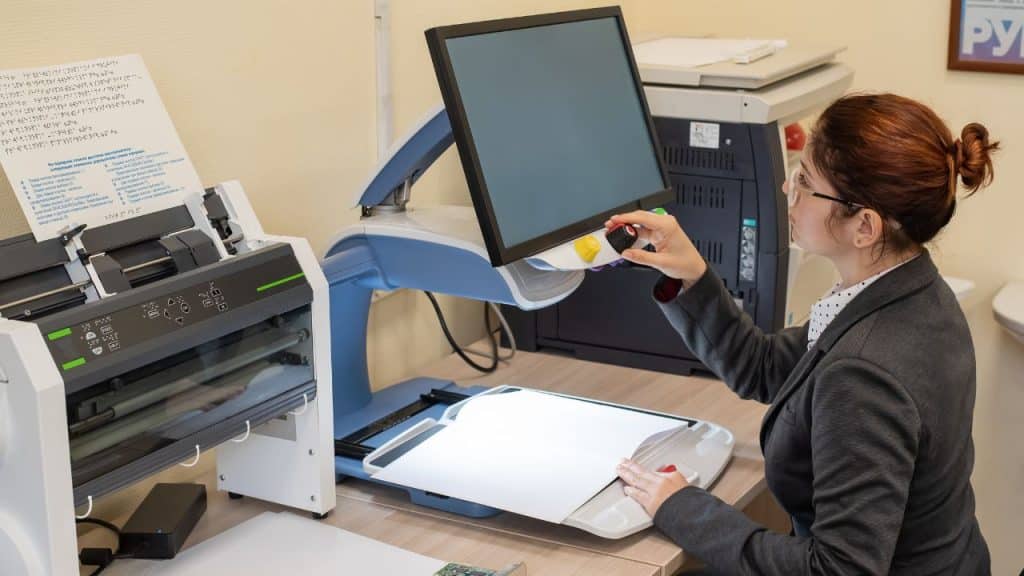
One blind woman works in distribution and fulfillment. Two blind women are reinventing their careers. Another blind woman with hearing loss works as a project director, one is a retired government employee, and others work in the nonprofit industry. Besides being female and blind or low vision, all these women are over 50 and continuing to successfully work while contributing to society.
These women are not unique. Women with vision loss are holding steady in the workforce. In 2025, 42% of women ages 16-64 with vision loss were employed, compared with 38% of men, according to the American Foundation for the Blind. Women’s rate has stayed at 42% since 2022, up from 28% in 2016. Research on workers who lose vision in midlife (ages 44 to 64) found that the likelihood of keeping a job has risen over time. A related research study also found women were more likely than men to keep their jobs after vision loss.
These figures offer an encouraging picture of women’s participation in the workforce, but statistics alone cannot explain how older women navigate the challenges of working with blindness or low vision. These women share a common thread. They all expected to work, possessed a strong commitment to learning, and had a deep desire to help others.
The Confidence to Build a Career
Confidence plays an important role for a blind woman in the workforce. It counters assumptions and low expectations, advocates for the accommodations they need, and fosters personal and economic independence. Additionally, when this kind of woman is confident, she establishes professional boundaries and can better address over-protectiveness from well-meaning colleagues.
Margret Allen, 61, who works at a Georgia-based Amazon distribution center, clearly displays confidence. Every day, she uses public transportation to travel from her home to work using a white cane. Once she arrives at work, she and another blind female co-worker scan and prepare large tote bags for packages. She decided to keep working after losing her vision and found the resources and support to do this.
She initially dealt with fear and depression but with a lot of support and rebuilding her self-confidence, continued with her life and returned to the workforce. “It was my eye doctor and vocational rehabilitation counselor who were supportive,” Margret recalled. “Also, I got support from my family. I was raised to be independent and not settle.”
Before losing her vision, Margret worked as an assistant supervisor at a catering company. But she knew she couldn’t continue that kind of work with decreasing vision. She began working in customer service at a bank. Then she worked as a receptionist with a mortgage company, and later as a tour guide at a blindness-awareness exhibit. Each position strengthened her confidence and determination to remain in the workforce.
Virginia Jacko, 85, also demonstrates that same confidence. She serves as President and CEO at the Miami Lighthouse for the Blind and Visually Impaired. She also came from a supportive family. “My mother was my role model. She was a nurse and was married and had five children,” said Virginia. “I learned how to be independent from a young age and take responsibility for myself.”
Before Virginia started working at the Miami Lighthouse, she had a rewarding career of 22 years as a financial executive at Purdue University. She began her career in the late 1970s advancing in financial management. However, as she started losing vision she searched for a vision rehabilitation center where she could not only maintain her independence but receive training from an organization with a proven track record helping blind and low vision people continue to work. “I took time off my job and relocated, thinking I would be there for a short time before returning,” Virginia explained. But once she started her training at the Miami Lighthouse, she wanted to stay and contribute. She began as a volunteer board member and later moved into a position as treasurer because of her finance background. Then in 2005, Virginia was appointed as the first blind president of the Miami Lighthouse.
The Commitment to Learning
Not only is confidence a key ingredient but having a commitment to learning. It is not just about personal growth but rather a bridge to career advancement and economic stability. Functioning at the intersection of gender, age, and disability, women in this demographic can face increased layers of systemic bias. Embracing a philosophy of continuous education is a powerful tool to combat this.
Sylvia Stinson-Perez, 57, is reinventing herself and her career. This Florida resident has worked several jobs over her life and believes those opportunities opened up doors to learning new things and advancing her career. After she finished graduate school, she worked as a social worker, then moved into administrative and leadership positions. Over the course of her career, Sylvia’s vision decreased and she learned quickly how important it was to stay current with technology. “There are always lots of things to know and learn over time, and there is a constant learning curve,” she said. “Having a willingness to learn is big for a lot of people because some don’t have the skills.” She recently put her technology skills to use by building a website and writing a free downloadable book titled, “treading the waters of life: a guide to self reflection and action.”
Margret also learned the value of building skills. At each point in her career she went back to her vocational rehabilitation counselor requesting more training which led her to the next position.
Deborah Lovell, 68, a retired vocational rehabilitation counselor also from Georgia, agrees. She not only kept up her own technology skills as a blind person but strongly encouraged her clients to do the same. When I first started my career, I was using a typewriter, then a computer and later a smartphone. I also had an opportunity to go back to school and earn a master’s degree which helped advance my career,” Deborah shared. “I see the biggest obstacle for blind women over 50 is not keeping up with technology. It moves so fast and can be hard but it is necessary.”
Learning new technology is only part of the equation for blind women over 50. They must also learn how to use this technology with assistive tools like screen magnifiers and screen reading software.
They must learn how to advocate for themselves when it comes to getting the necessary training and tools to perform their job duties. Kendra Farrow, 52, is blind and has hearing loss, and has experienced this firsthand. She is the Project Director at the National Research and Training Center on Blindness and Low Vision in Mississippi.
“Learning how to use work-related software is complicated because my employer would tell me it is accessible and it wasn’t,” Kendra said. “I would go to the training but there would be accessibility challenges. The trainer would not know how to instruct me without using a cursor, pointing and clicking, and then I would fall behind my sighted co-workers.” Kendra also said she was proactive and requested access to the software in advance to learn how it worked before the training but was turned down. Ultimately, her employer had to hire an assistive technology instructor to train Kendra causing her to fall more behind in her workload.
When she started her career some 30 years ago, her vocational rehabilitation counselor provided assistive technology but no training. “It was assumed I would naturally learn how to use it,” Kendra explained. “I learned through self-determination along with trial and error. I also asked other blind and low vision friends for help.”
Another observation Kendra shared is that accessibility is layered. Sometimes people think that because something follows the law means it is user friendly. In reality, legal compliance does not always guarantee practical, accessible user experience. The best approach to solving this problem is build accessibility into the process from the start rather than treat it as an afterthought.
Part of Kendra’s career success is learning how to solve problems, troubleshoot and be her own tech support. Her next technology challenge is learning about AI. She says AI is not really geared toward the kind of work she does but she doesn’t want to fall behind and lose career opportunities.
Desire to Help Others
The desire to help others serves as a powerful professional guide for a blind woman over 50 by directly aligning her lived experience, empathy, and maturity with high-demand roles in advocacy, education, and social services. Some blind and low vision women, like Sabrina Washington, 54, opt to work as a Vision Rehabilitation Therapist (VRT) or Teacher of the Visually Impaired (TVI). Her role at the Blind Industries and Services of Maryland allows her to use personal insight to teach adaptive skills and braille to blind and low vision seniors over 50 years old. “I have always worked with older people and enjoy this kind of work,” Sabrina said. “The need is great because many of my clients have been sighted throughout their lives. Seeing them gain their life back and learn independent skills is very rewarding and gives me joy.”
Sabrina has been blind all her life and has been helping fellow blind and low vision people for over 22 years. She started in the Bahamas by creating and organization to serve her community. In 1999, before moving to the United States, Sabrina founded the Grand Bahama Association for the Blind and Visually Impaired. “I recognized that many individuals throughout the island were losing their vision and had no organization to turn to for support, training, or fellowship,” Sabrina explained. “My vision was to create a place where individuals could learn essential independent living skills, connect with others, socialize, and regain their confidence and independence.”
Whether Sabrina is helping people here in the US or in the Bahamas, her goal is to serve her community. “One of my clients wanted to quit,” she said. “But after seeing the program and talking to me, the client had a total change of mind. It is moments like this that make you want to keep going.”
Like Sabrina, Sharon Huey, 73, from Florida, has built much of her professional life helping others. She has taken a different path, from being a licensed clinical psychologist working with special education students in the school system to later in private practice. Her last position was as an Information and Referral Coordinator at the American Printing House for the Blind where she provided information and resources to adults experiencing vision loss along with friends, family, medical providers, and others. This role was her favorite position. “There was no major paperwork, but I still got to help people and give out resources,” Sharon said. “It was lots of fun overall.” Today, Sharon is reinventing herself and creating new work opportunities to help others in her community. “I am interested in starting a business around blindness and low vision focusing on caregivers, assisted living facilities, eye doctors, and professionals in the field.”
Six Things Employers and Other Job Seekers Can Learn From These Women
Blind women who are over 50 and working have a lot of wisdom and insight to share from their years of working. Listening to a seasoned professional can help employers and younger blind women avoid missteps and other complications. Here are six compelling reasons to take advice and counsel from older, blind working women:
1. They have proven and trusted accommodation methods: Older blind women have spent decades identifying, testing, and refining workplace accommodations. They know what assistive technologies, ergonomic setups, and workflow adjustments actually work and boost productivity. This wealth of knowledge saves employers time, energy, and money.
2. They have retention and loyalty awareness: They understand the specific cultural and environmental factors that make a workplace inclusive. By listening to their experiences, employers can identify hidden biases in hiring or promotion track records and build a more loyal, diverse workforce.
3. They have resilience and problem-solving skills: Navigating a career as a blind woman requires high-level adaptability, institutional knowledge, and creative problem-solving. Employers who tap into this expertise gain mature leaders who can mentor teams and handle complex organizational situations.
4. They hold a career blueprint: Older generations have already navigated the steep learning curves of career advancement, self-advocacy, and disclosing a disability to employers. Their stories provide a roadmap for avoiding common pitfalls and accelerating professional growth.
5. They can provide intersectional mentorship: Younger professionals face unique challenges at the intersection of youth, gender, and disability. Older blind women offer a safe space for mentorship, helping younger women build confidence, fight imposter syndrome, and learn how to assert their value in competitive environments.
6. They know advocacy history: They understand the systemic battles previous generations fought, including efforts to establish digital accessibility standards and equal-pay protections. This knowledge arms younger workers with the context needed to continue pushing for progress today.
Plans for the Future
The stories of these women show that vision loss, age, and gender do not have to define a woman’s career or limit her contributions to society. Through confidence, a commitment to lifelong learning, and a desire to help others, blind and low vision women over 50 continue to find meaningful work, reinvent themselves, and open doors for others.
Their experiences also remind employers that accessibility, ongoing training, and opportunities for advancement are essential to building an inclusive workforce. As these women look toward the future, they demonstrate that career growth does not have an age limit and that the knowledge, resilience, and wisdom gained over a lifetime remain valuable assets. Their message is clear: keep learning, believe in yourself, and never underestimate your contribution.
About the Author: Empish J. Thomas is a fellow with The Loreen Arbus Accessibility is Fundamental Program, a fellowship created with Women’s eNews to train women with disabilities as professional journalists so that they may write, research and report on the most crucial issues impacting the disabilities community.