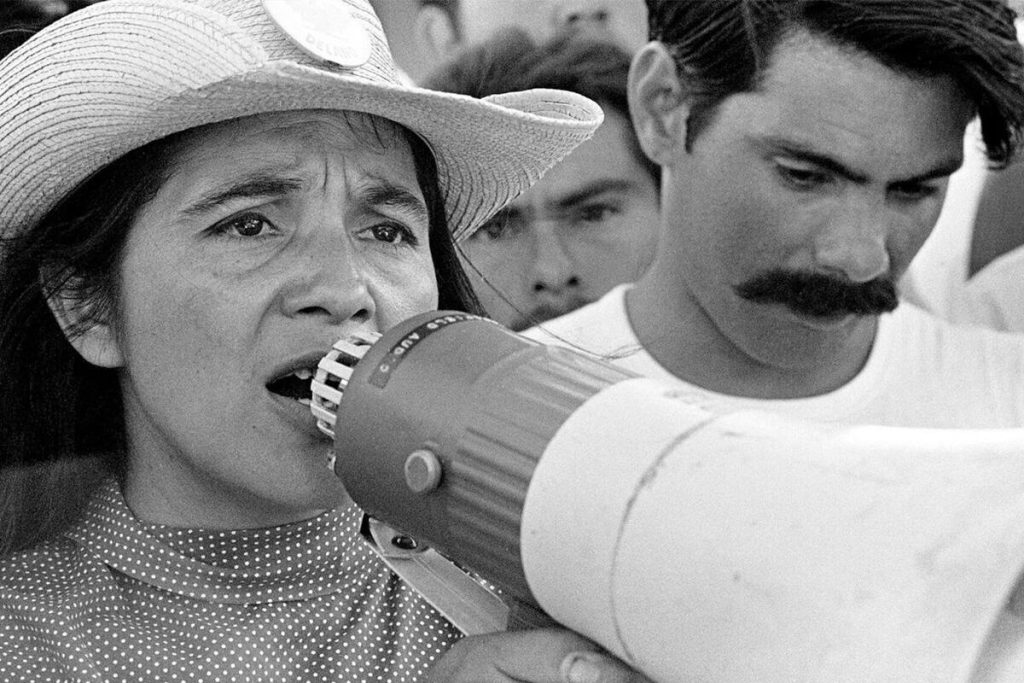
Our organization, Survivor Justice Center, honored Dolores Huerta at our Bridge to Justice Gala last May. We honored her for her legacy for championing rights of others, and yet we now have learned she was also a silent survivor.
Dolores shocked the nation with her statement about the abuse she endured by Cesar Chavez. I’ve been providing survivor-based legal services for over 20 years, but even I was shocked and saddened to hear Dolores Huerta talk about the rapes and abuse she survived, all while continuing to work alongside her abuser.
Dolores placed the farmworkers movement over her pain, her suffering, and her victimization. Others knew but said nothing about the abuse. They protected not just the movement, but a man who was known to take advantage of young women who looked up to him. This illustrates, in the most glaring way, what survivors do to champion great leaders—great men—in powerful movements that are critical to advancing justice. They remain silent to avoid “damaging the cause.”
There should be zero blame for Dolores and her decision not to share what she endured for over six decades. Her silent suffering is very common. Survivors often hide their abuse, worried they will be accused of lying or attempting to damage someone’s reputation. Sharing their trauma and reliving those moments are difficult enough; having your own character called into question forces survivors into the shadows.
During one of my first restraining order trials for a survivor of domestic violence, my client didn’t disclose that she had been raped by her abuser until the end of her testimony. The Court, opposing council, and her abuser immediately called into question the credibility of her statement, suggesting it was a “Hail Mary.” I was stunned. Why would my client wait to disclose a rape—a crime that is punished more harshly than domestic violence—as some sort of sneak attack? Was it that hard to believe that a man who had emotionally and physically abused his partner would not also use sexual violence?
Those of us in this movement know that survivors often choose not to report for many reasons including fear of immigration enforcement, distrust of law enforcement, economic reasons, cultural pressures, or shame from their community. Even survivors who have led movements and fought for justice face these same barriers when choosing to disclose.
Last year, we at Survivor Justice Center were lucky to honor Dolores Huerta and feature her as our Gala keynote speaker. Before the event, I spoke about the silence of survivors and the barriers they face in securing justice. Little did I know that right by my side was Dolores Huerta, a silent survivor herself. We are so proud of Dolores for her strength in speaking out. I hope this shows survivors that it is never too late to share their own story and that no abuser is untouchable. But we must also ask ourselves: When will it end? When will we center survivors in the narrative and ensure everyone in the community is free from violence? What can we do to ensure abusers are held accountable?
Now more than ever, survivors, especially immigrant survivors, are being silenced. Our clients are afraid of reporting abuse. They are afraid to leave their homes. Now that ICE is at airports, they are afraid to travel or meet loved ones. I have had supporters call for help for their housekeepers or childcare providers who have disclosed abuse and are afraid to tell anyone.
We need to go back to what the law intended–protect survivors. Immigrant survivors are eligible for U Visa’s, a path to citizenship to protect them while they report their crimes to law enforcement, but ICE actions are working against the very laws U- Visas were created to protect. All survivors have remedies, and face challenges when nonprofit funding is cut and survivor voices are silenced.
Dolores Huerta’s story is one of strength and power, but also exemplifies a chilling reality: Anyone, no matter their immigration status, socioeconomic level, or prominence in the media, can be a survivor. When they share their stories, we have to do more than listen. We must act.
About the Author: Carmen McDonald is an attorney who serves as executive director of the Survivor Justice Center, and is a former Public Voices Fellow of the OpEdProject.